
 Kiny
Kiny
 Eng
Eng
 Fr
Fr







HWPL international workshop highlights role of peace journalism in addressing news avoidance
 Uwajeneza Donatha
Apr 21, 2026 - 07:10
Uwajeneza Donatha
Apr 21, 2026 - 07:10
An international workshop on peace journalism has brought together journalists from across the globe to explore how media can play a stronger role in promoting peace and countering the growing trend of news avoidance.
kwamamaza
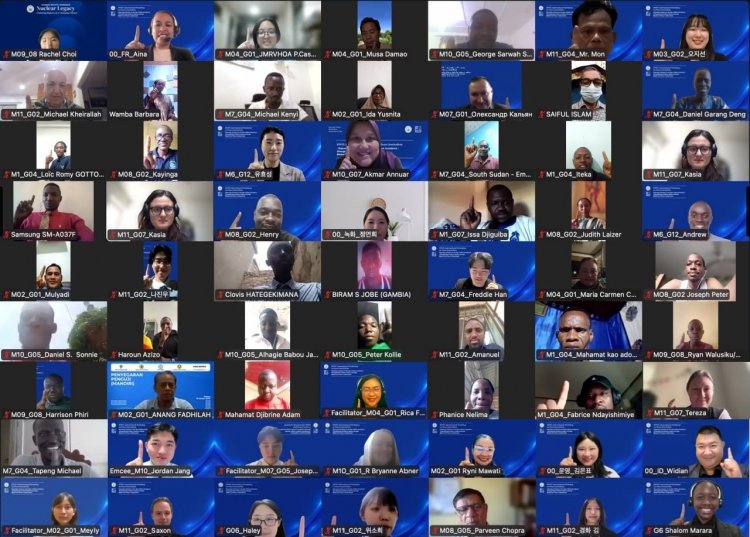
The HWPL International Workshop on Peace Journalism Studies, held virtually, attracted around 220 journalists under the theme: “Reporting Solutions in the Age of News Avoidance: Strengthening Audience Agency through Media-Civil Peace Collaboration.”
The discussions focused on how journalism can move beyond traditional reporting to offer solutions, reduce conflict, and empower audiences.
The event featured presentations from contributors to Volume 4 of the HWPL Peace Journalism Studies Journal, emphasizing the need for solutions-oriented reporting that highlights hope and pathways to conflict resolution.
Indonesian journalist Achmad Yani, from Indepthnews.id, presented research on how international media narratives influence the de-escalation of the Thailand–Cambodia conflict. His findings revealed that "64% of analyzed global media coverage focused on military clashes and political tensions, while largely overlooking the experiences of over 200,000 displaced civilians."
He stressed that editorial choices in framing stories significantly shape public understanding and called for more victim-centered reporting that includes peaceful solutions.
Another Indonesian journalist, Ida Yusnita of mediabanjarmasin.com, addressed the concept of peace as a fundamental human right. She argued that "peace goes beyond the absence of war, encompassing security, justice, and equality. Yusnita highlighted the shared responsibility of governments, societies, and the media in fostering peace, advocating for tolerance education, anti-discrimination policies, and stronger independent media systems."
From the Dominican Republic, journalist, lawyer, and professor José Nicolás Arroyo Ramos examined how modern media environments can fuel polarization. He introduced the concept of “discursive violence,” describing communication that intensifies division and hostility without physical confrontation. He warned that in the digital era, emotionally charged and unverified content spreads rapidly, often simplifying complex issues into opposing narratives. As a solution, he promoted peace journalism that addresses root causes, includes diverse perspectives, and offers constructive approaches.
Despite the virtual format, the workshop enabled active participation through breakout discussions, where attendees explored the importance of hope-driven reporting and positive narratives in conflict coverage.
The event also introduced the Media and Global Peace Platform (MAGP), a global network hosted on Substack that connects journalists and non-governmental organizations across borders. The platform aims to support collaboration and expand the practice of peace journalism worldwide.
@Elie Byukusenge
kwamamaza